





What’s the difference between basswood plywood and birch plywood?
If you’ve been shopping for plywood for a craft, you may have come across both basswood plywood and birch plywood. Both are popular choices for crafting, laser cutting, woodworking, and other creative projects. At first glance, they can look quite similar. They’re both light-colored hardwoods, and both are commonly used for woodworking- but they behave differently once you start working with them.
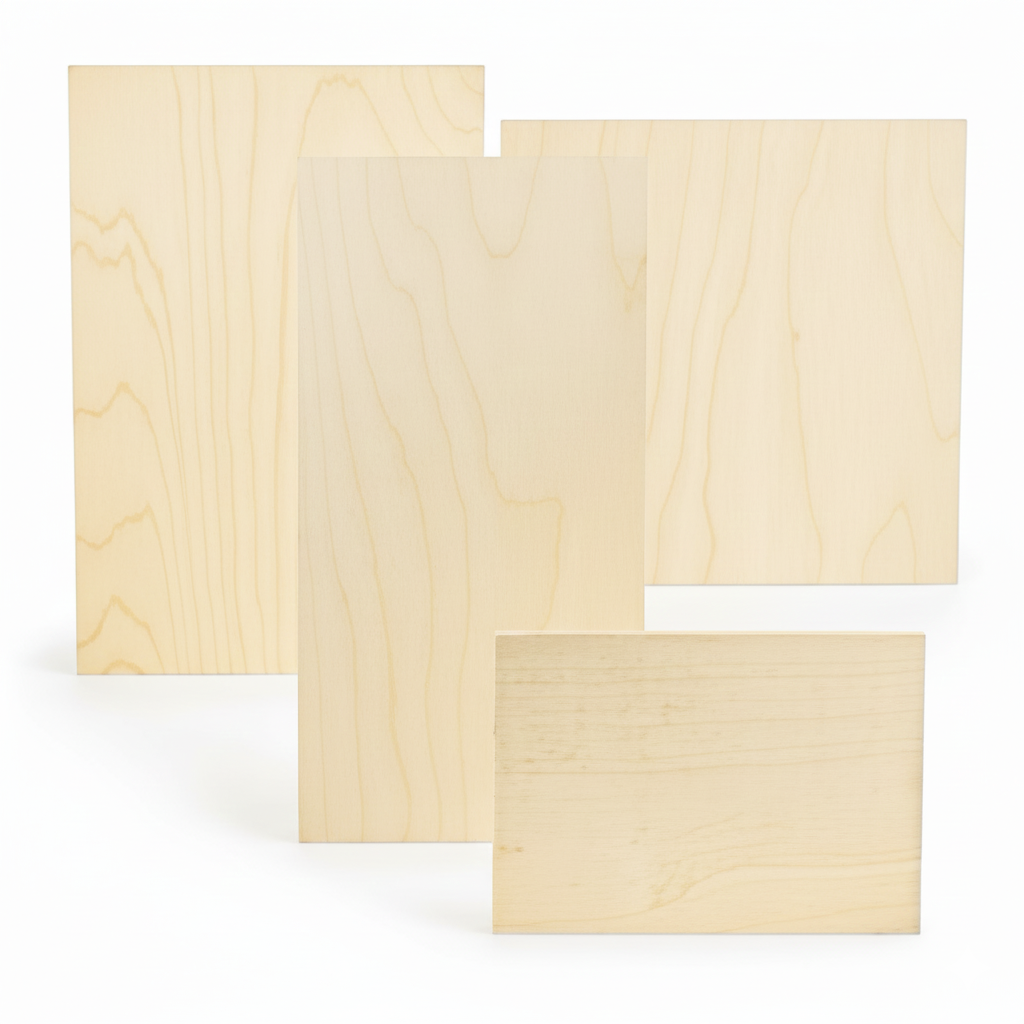
The characteristics of the woods carry through to the finished plywood, affecting its weight, hardness, appearance and workability. Basswood plywood is lightweight and relatively soft with a fine, subtle grain. Birch plywood is harder, denser, and generally more durable, with a somewhat more noticeable natural grain. Those differences may not seem significant when you’re looking at two unfinished sheets side by side, but they can make a difference once you start cutting, sanding, painting, engraving, or assembling your project.

What is basswood plywood?
Basswood plywood is made by layering thin sheets, or veneers, of basswood and bonding them together. Basswood is a light-colored hardwood with a fine, relatively uniform texture and subtle grain. It is also quite soft for a hardwood, which makes it easy to cut and shape. It’s lightweight nature make it a popular material for signs, ornaments, models, and other projects where lightweight and ease of cutting are important.
The relatively subtle grain can also be an advantage when painting or adding other finishes. Instead of a strong grain pattern becoming part of the finished design, the surface tends to provide a more understated background.
Because basswood is softer, however, it can be more susceptible to dents and surface damage. If your finished project will be handled frequently or needs to withstand more wear, the added hardness of birch plywood may be worth considering.
What is birch plywood?
Birch plywood is made with the same process- from layers of birch veneer, creating a strong, stable sheet material. Birch is considerably harder and denser than basswood, which gives birch plywood a different feel and makes it well suited to projects where durability and rigidity matter.
Birch plywood is commonly used for crafts, woodworking, laser cutting, CNC projects, signs, furniture, and other applications where a stronger sheet material is helpful. Its relatively fine grain also gives it a clean, natural appearance when left unfinished, while providing a smooth surface for painting, staining, engraving, or other finishes.
One of the advantages of birch plywood is its versatility. It can work just as well for a small decorative craft as it can for a project that needs a little more structural strength.

Basswood plywood vs. birch plywood
Here’s a handy graph to help you compare the differences between basswood and birch.
|
Feature |
Basswood Plywood |
Birch Plywood |
|
Weight |
Lightweight |
Heavier and denser |
|
Strength |
Good for lightweight projects |
Better for projects requiring strength |
|
Grain |
Subtle |
Subtle |
|
Cutting |
Relatively easy to cut |
Slightly harder material |
|
Painting |
Excellent |
Excellent |
|
Laser cutting |
Popular for lightweight craft projects |
Popular for detailed and durable projects |
|
CNC projects |
Easy to work with |
Strong and durable |
|
Decorative crafts |
Excellent |
Excellent |
|
Projects requiring durability |
Good, depending on the application |
Excellent |
A note about plywood grades
It’s also worth remembering that the type of wood is only one part of the equation. Plywood can vary significantly based on its grade, number of plies, and thickness.
For example, when shopping for birch plywood, you may see terms such as Baltic birch or B/BB. These describe the level of perfection that the wood is graded at beyond simply saying that it is made from birch. Understanding the grade and construction can be just as important as choosing between basswood and birch.
Basswood or birch plywood: which one is right for you?
If you're deciding between the two, start with the finished project rather than the name of the wood. Consider how much the piece will be handled, whether weight matters, how you plan to cut it, and whether you want the natural grain to be visible. Once you know what you need the plywood to do, choosing between basswood and birch becomes a lot easier.

