







You know that feeling when a shelf is technically fine but…still looks unfinished?
It holds stuff, surely. It’s straight. It’s level. But something about it feels plain, almost to the point of making it look temporary. A lot of the time, it’s the front edge.
That flat, blunt line across the front of a shelf can make even nice shelving look basic. And once you notice it, it’s hard to unsee! Fortunately, that’s where shelf edging trim can save the day.
Adding wood shelf edge trim doesn’t require tearing shelves down or replacing anything. You’re not remodeling. You’re not redoing the wall. You’re just upgrading the part that’s most visible. And weirdly enough, that small detail can make the entire shelf feel finished.
So, let’s talk about what shelf trim actually is, how people use it, and how to attach and paint it so it looks great in your home!
What is shelf trim?
Shelf trim is decorative trim for shelf edge surfaces. That’s the very simple version.
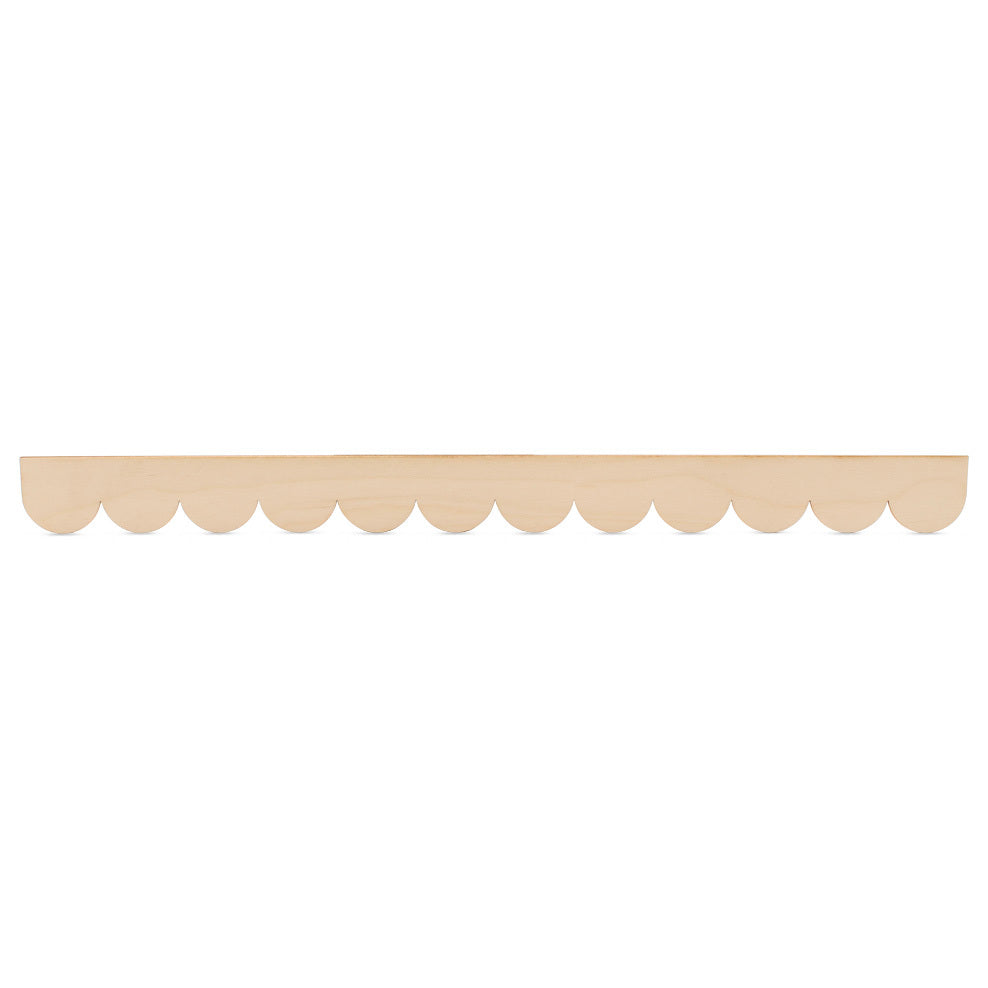
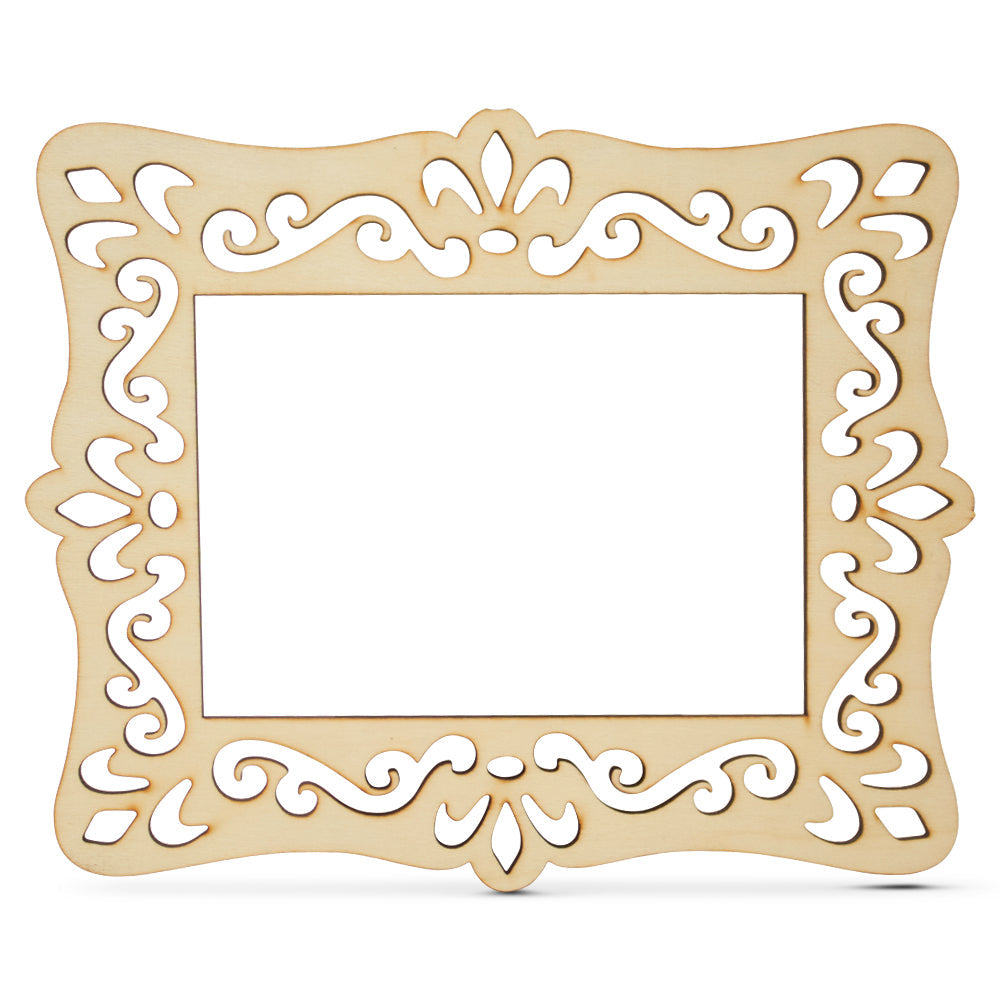
Instead of a straight front board, you attach a shaped wooden piece that goes along the entire edge. It might be scalloped. It might have small cutout details. It might add a soft curve instead of a hard line.
And that’s about it! Shelf trim may not sound like much, but visually? It changes a lot.
Wooden shelf edge trim gives basic shelving a pinch of personality. It softens the structure. Especially in spaces where sharp lines feel too harsh (like nurseries, craft rooms, boutiques, or reading corners), shelf edging trim can completely shift the mood.
Think about it this way: shelves are basically just horizontal rectangles. Adding trim for shelf edge detailing is like adding molding to a ceiling. The underlying function stays the exact same. The finish goes up a few levels.
And because shelf trim is (typically) wood, not plastic or vinyl, it blends naturally once painted. It doesn’t make it obvious that you’ve added something DIY to your shelves. It looks like a natural extension of what you started with—just much better.
People often assume you need custom shelving made by a professional to get that look. You really don’t. You just need the right trim and a few hours of free time!
Shelf edge trim project ideas
Shelf edge trim ideas range from subtle to playful, depending on your particular preference and the space you’re working in.
For nurseries or kids’ rooms, scalloped wooden shelf edge trim is very popular. There’s something about a soft curve along the shelf that instantly makes the room feel more welcoming and safe. You don’t have to overdecorate the rest of the space, as the trim does enough. It’s also a way to enhance (but not replace) your babyproofing measures by literally covering up the sharp shelf edge with a curved alternative.
In craft rooms, it’s a different vibe. Some people paint the shelf edging trim the same color as the shelves so it blends in. Others go bold and paint the trim a contrasting color so it pops.
Both work. It just depends on whether you want the trim to be subtle or really announce itself as soon as someone walks in the room. In farmhouse kitchens, for example, white shelves with subtle scalloped trim look classic.
Retail displays are another great example of where you can go and what you can do with the right edge trim. Small shops use wood shelf edge trim to make simple shelving feel custom without actually building custom cabinets to hold products or decorations. That extra detail elevates everything displayed on the shelf.
And then there are themed options. A heart design can work beautifully in a child’s bedroom. A star pattern might be perfect for a playroom or reading nook. Used carefully, these details feel charming and don’t come across as too “busy.”
If you’re still short on ideas, try to look at it like this: if the shelf is the frame, the trim is the finishing stroke. What last impression do you want to add to your shelving to give it that perfect look?
How to attach shelf edge trim
Before you get stressed out for nothing, here’s the great part: it’s not complicated to attach edge trim to a shelf. You don’t need special tools. You don’t need professional skills (though an attention to detail can help a lot).
First, measure the front of your shelf carefully. Precision is really important here. Trim that’s slightly too short or long will show, and it will create the opposite effect. Rather than elevating the look of your shelving, the mismeasured trim will make it look wonky.
There’s a chance that you might need to sand your shelves before applying the trim. If so, cut carefully and sand the edges smooth. If you have rough edges on your shelves, sanding before trimming is a must. If you’re unsure by thought, do a light sanding just in case.
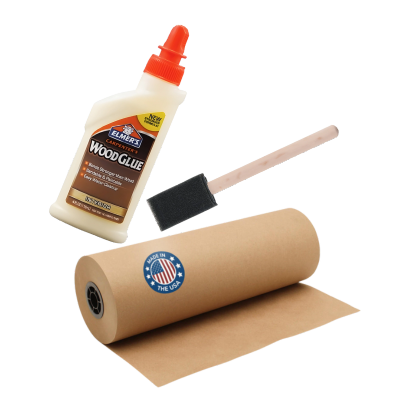
For attaching wood shelf edge trim, most people just use simple wood glue. It’s easy and effective. Apply a thin, even layer to the back of the trim, press it firmly against the shelf edge, and hold it in place. Clamps can help a lot. If you have them, use them (your arms will thank you).
If you don’t have clamps, painter’s tape can sometimes hold lighter trim in place while the glue dries. For heavier-use shelves, small finishing nails can reinforce the attachment. Just make sure they’re countersunk slightly so they don’t show.
Remember to allow the glue dry fully. Never try to rush it. Let the adhesive cure before adding weight or painting.
It’s a small project, but clean alignment makes all the difference. If the trim sits flush and even, it looks like it was always part of the shelf.
Painting shelf edge trim
Painting shelf edging trim is where you decide whether it blends or it stands out. If you want the trim to feel built-in, paint it the same color as the shelf. That creates a seamless look. The decorative detail is there, but it won’t draw unwanted attention to the trimming itself.
If you want the trimming to stand out, go for contrast. White shelves with pastel trim. Natural wood shelves with painted scallops. Dark shelves with light trim. There’s no rulebook here.
And if the shelves are in a high-traffic space, consider a clear topcoat. This will protect the edges from chips and wear.
Decorative shelf edge trim from Woodpeckers
If you’re ready to try this without getting overwhelmed, Woodpeckers keeps things simple and fun. Our Classic Scalloped Shelf Edge Trim is clean and versatile. It works in nurseries, craft rooms, and kitchens that need a softer look.
Alternatively, if you want something softer and more playful, our Heart Design Shelf Edge Trim can add personality to any shelf. The negative spacing (i.e. the hearts) also gives it an even more interesting 3D effect.
And for something decorative but still able to fit into many different spaces, our Star Design Shelf Edge Trim is awesome for kids’ spaces and themed rooms.
All of these wooden shelf edge trim options come unfinished, which means you can paint them however you like. Match the shelf. Contraste it. Stain it. Seal it.
Did you enjoy our decorative shelf edge trim guide? Be sure to let us know in the comments and check out our shelf trim shop to find the perfect gift for yourself or a loved one!
