


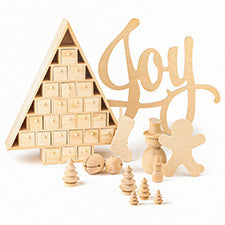



Wooden knobs don’t always get the attention we think they deserve. They’re small. Simple. Easy to overlook.
But once you start using them, you see just how often they can be helpful in craft projects.
A handle here. A raised detail there. These add dimension to something that would otherwise feel flat. Small wooden knobs for crafts aren’t usually the main piece, but they’re often what makes the whole project feel finished.
And you’re getting unfinished wood, you can take it in just about any direction. Painted, stained, left natural, or combined with other materials. You don’t have to force them into a specific look.
If you’re ready to explore different sizes and styles, you can browse our full collection of wooden knobs.
But if you’ve never worked with wood knobs for crafts before, this is a great place (and time) to start!
Why wooden knobs work so well in craft projects
The main thing wooden knobs bring to a project is dimension. Most craft surfaces are flat (panels, cutouts, signs, trays, etc.). That works, but sometimes everything ends up on the same plane. That’s where things can start to feel a little “one-note.”
Adding a wooden craft knob changes that. Just one or two raised elements can shift how a piece looks. It creates a focal point. Something your eye lands on instead of passing over.
They’re also functional when you need them to be. That’s another reason people keep coming back to them. You can use them purely for decoration, or you can use them as handles, hooks, or small hardware pieces.
And unlike metal or plastic, wood blends in. It doesn’t compete with the rest of the project. Instead, it simply becomes a part of it.
Another thing that helps: they’re easy to work with. No special tools required. No complicated prep. You can drill them, glue them, paint them, or just attach them as-is.
Decorative uses for wooden craft knobs
This is most often where people start with wooden craft knobs. Not because knobs are meant to be decorative first, but because it’s the easiest way to experiment with them.
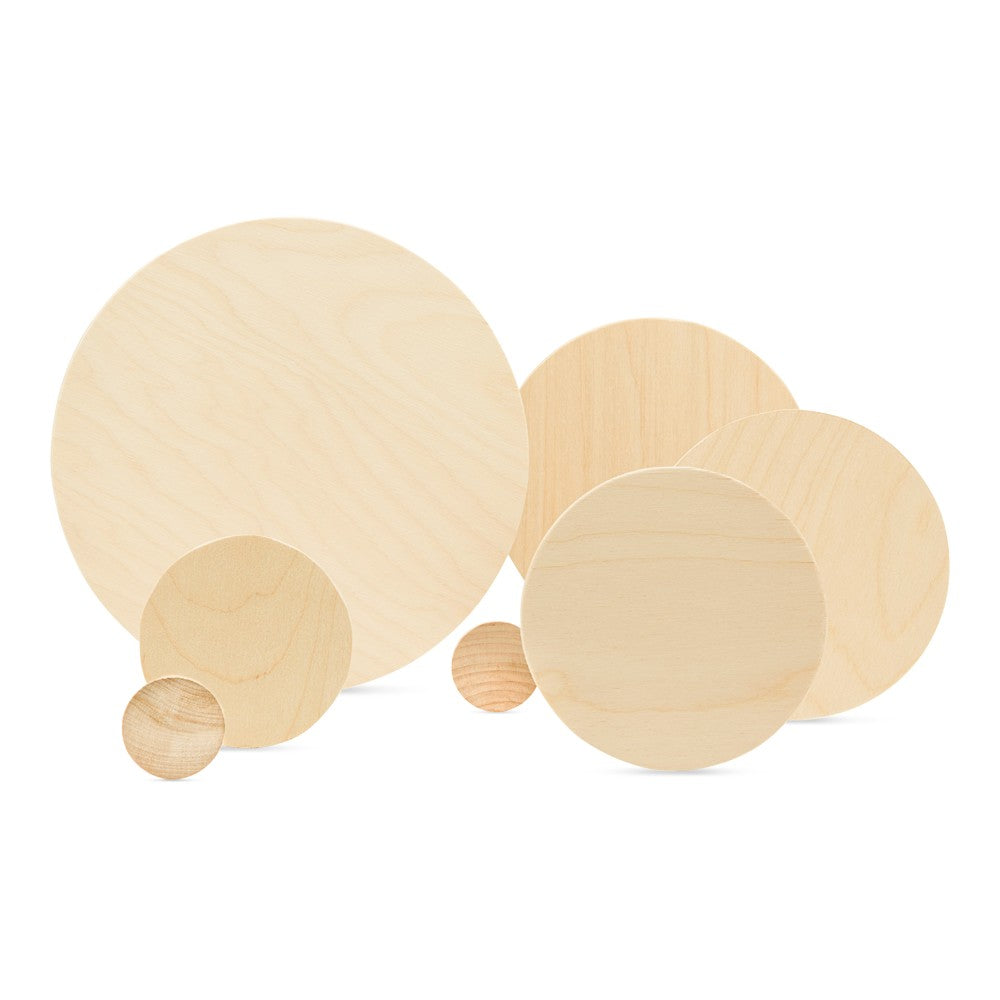
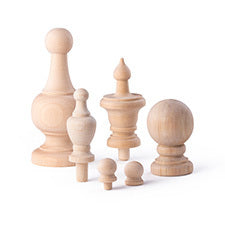
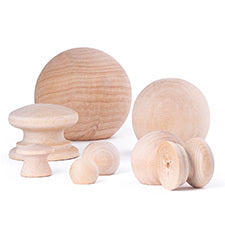
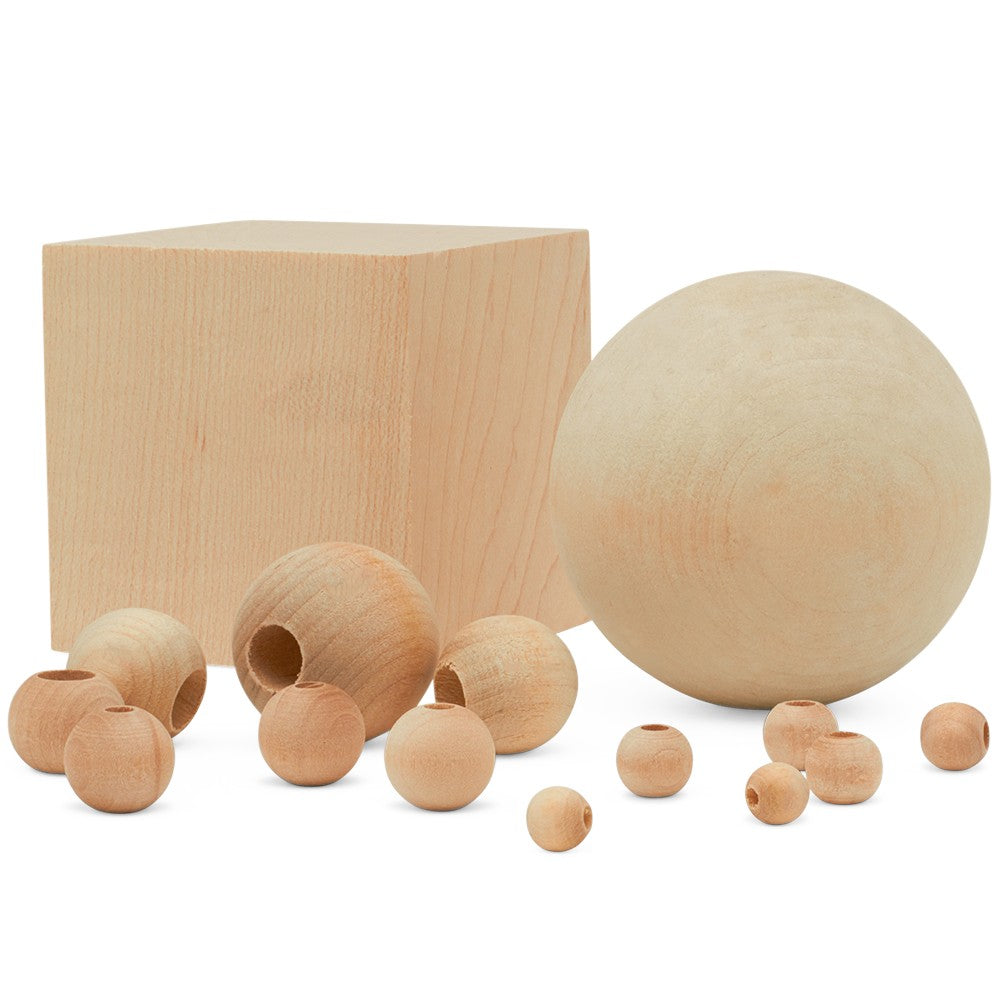
A wooden ball knob can act as a small accent on a sign or wall piece. It gives you a raised point without needing to build a full layered design. You’ll often see them used as markers, placeholders, or just visual anchors.
For example, on a painted wood sign, adding a few evenly spaced wooden knobs can break up empty space without adding extra clutter. It’s a subtle difference, but it changes the look and feel.
They also work well in wall decor projects. Some people use multiple knobs arranged in patterns — grids, lines, or even abstract groupings — to create texture on a flat surface. Painted all one color, they blend in. Painted in different tones, they stand out more.
In kids’ rooms or play areas, wooden craft knobs are often used as part of interactive decor. Think of a board with different textures, shapes, or colors where knobs become something to touch and move around.
Even something as simple as painting a few knobs and attaching them to a board can turn into a display piece that feels a little more dimensional.
Functional craft ideas using wood knobs
Wood knobs for crafts aren’t just decorative. They’re actually useful in a lot of projects. Drawer pulls are probably the most obvious use. If you’re working on small storage boxes, organizers, or even repurposed furniture, a wooden knob is an easy upgrade. Paint it to match the piece, or leave it natural for contrast.
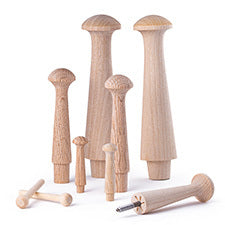
Wall hooks are another common idea. A larger wooden knob attached securely to a board can act as a hook for lightweight items like keys, jewelry, or small bags. It’s a simple project, but one that people can use every day.
You’ll also see wooden knobs used in coat racks, especially in DIY versions. A wood base, a few evenly spaced knobs, and you’ve got something functional that still looks clean.
For craft rooms, knobs can be added to organizers or storage units to make them easier to use. It’s a small detail, but it makes a difference over time.
Even in non-obvious places, they show up. Some people use them as feet for small boxes or trays. Others use them as stoppers or spacers in handmade pieces.
Creative project ideas you might not expect
Once you get past the obvious use cases, wooden ball knobs for crafts start to open up a bit. People use them in game boards — checkers, tic-tac-toe, or custom tabletop games — where they act as pieces or markers.
They also work great in learning tools. Teachers and parents use them in counting boards, sorting activities, or fine motor skill exercises. Because they’re smooth and easy to handle, they work well for that.
Another interesting use is in holiday decor. Painted knobs can become ornaments, small decorative accents, or part of larger themed displays. Grouped together, they can even form shapes like trees, wreaths, or abstract patterns.
Some crafters use them in mixed media projects. Combined with fabric, paper, or other wood elements, knobs add a physical layer that flat materials can’t. And then there are projects that are harder to categorize. The kind where you start with one idea, add a few knobs, adjust as you go, and end up somewhere completely different from what you expected.
Painting and finishing wooden knobs
Since they’re unfinished, wooden craft knobs can go in a lot of different directions. Some people leave them natural. They come smooth, but they can easily be sealed with a clear coat. This works well when you want a clean, minimal look or when the rest of the project already has enough going on.
Painting is the most common approach. Acrylic paint is almost always a good choice, especially for smaller knobs. It dries quickly and gives you solid coverage. For a softer look, lighter colors or washed finishes can help the wood grain show through a little more. For something bolder, solid colors or even patterns can make the knob stand out.
If you’re using knobs in something that will be handled often (like drawers or hooks), adding a clear sealant is a good idea. It protects the paint and helps prevent wear over time. Staining is another option, especially if you’re matching other wood elements. It gives you a more uniform look while still keeping the natural feel. There’s no single “right” finish. It really depends on what the rest of the project looks like.
Getting started with wooden knobs
If you’re curious where to begin, start simple. Pick a project that could use either a small functional upgrade or a bit of added dimension. A box. A sign. A small wall piece. Something manageable. Try adding one or two knobs first. See how it changes the look. Adjust from there.
You don’t need to map everything out ahead of time. In fact, these tend to work better when you don’t overthink them. Just take things slow and let the wooden knobs do the heavy lifting!
Did you enjoy our wooden knobs for crafts guide? Be sure to check out our wooden knobs shop to find the perfect gift for yourself or a loved one!
