


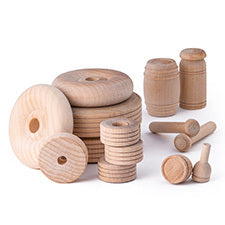
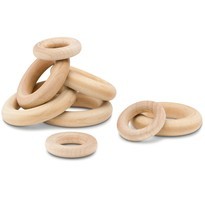
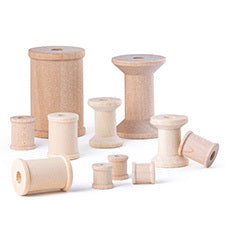
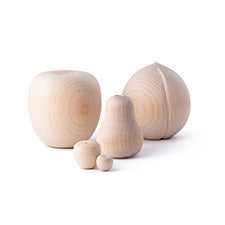




If you’ve ever watched a toddler push a wooden engine across the floor and narrate the whole trip, you already know: good wheels, solid axles, and believable cargo make it all work. Woodpeckers stocks all three: the rolling gear, the joinery to hold it together, and the tiny loads that bring the train to life. This way, you can build train cars that travel and stand up to years of station stops under the couch.
Below, we’ll take a look at the most important wooden train parts for crafting, plus building tips for DIYers.
Functional wooden wheels
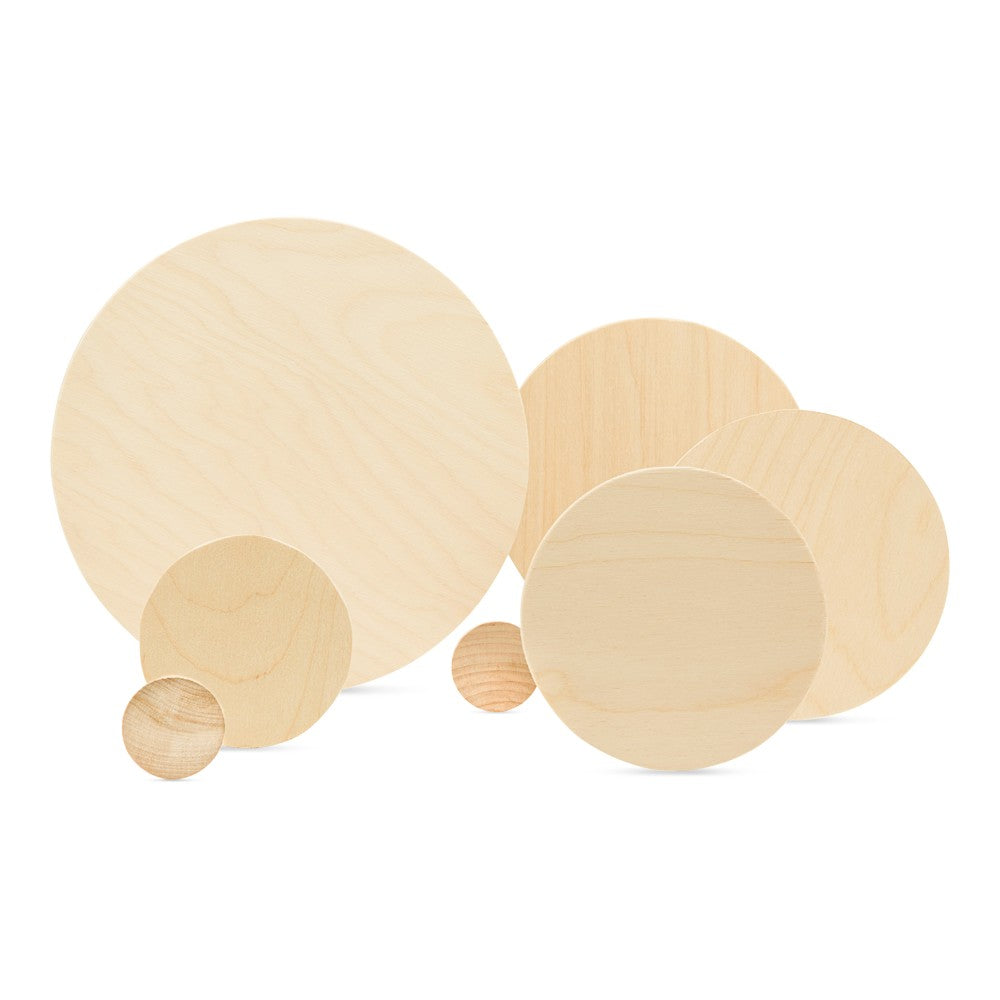
Start with the wheel style that fits the job. Classic wood wheels are the do-everything option. They offer a clean profile, 1-3/8th-inch diameter, a 3/16th-inch hole for the axle, and a little shoulder at the rim that already reads “train” before you paint it. They’re a good choice for engines, passenger cars, or any car that you want to glide with minimal effort.
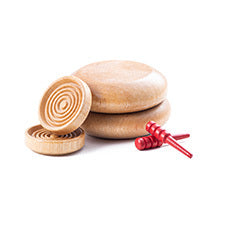
If your track is a rug, not rails, wooden treaded wheels may be an even better option. The shallow grooves give traction, so a small engineer can power through the hallway without losing momentum. For heavy-duty looks (think log haulers, maintenance cars, or a chunky caboose), wooden slab wheels offer more visual weight. The broad face fills the wheel well and plants the car, especially when you leave the wood natural or hit it with a light stain.
A few sizing notes to save headaches later. Choose a diameter that clears the car's bottom by at least a pencil’s thickness (just shy of a centimeter, or a full centimeter to be safe). That gap keeps corners from catching on thresholds.
Match left and right wheels carefully, as mixing diameters on one axle is a recipe for drift. If you’re building a long flatcar, slightly larger wheels on the outer trucks can level a chassis that wants to sag in the middle. And if your design calls for fenders, test the car with a scrap wheel first; it’s easier to adjust a curve now than to sand bump-stops after paint.
Axles, spacing, and assembly
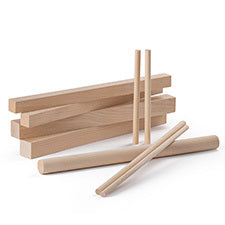
Wheels are only as good as the rod that holds them up. Woodpeckers’ wooden axles are perfectly straight, smooth, and sized to fit the wheel bores properly. They’ll be snug enough to avoid wobble, but free enough to spin.
Dry-fit every axle and wheel before glue touches the bench. If the fit is a hair tight, burnish the axle end by rolling it under sandpaper rather than drilling the wheel. Glue the inside face of the wheel, not the axle shaft (a drop of wood glue is plenty), and press with a twisting motion. Wipe any squeeze-out immediately.
Keep the chassis square while the axles set. A scrap board with two parallel lines drawn at your target wheelbase makes alignment quick and easy. Place the car body so the lines peak out evenly at each end, then view the body long-ways to confirm both axles are truly perpendicular.
For free-rolling cars, add a paper-thin washer or leather spacer between wheel and body to prevent side rub, and leave a sliver of play so grit won’t lock things up. If you’re making a tender or caboose that needs to pivot, mount the trucks on small turntables or a single center screw through a fender washer. They’ll follow imperfect “tracks” without binding.
Finish goes on after assembly. A coat of beeswax mineral oil blend rubbed into the turning parts keeps them moving and kid-safe. If you paint wheels for visibility, mask the treads so you don’t add thickness that can squeak on tight clearances.
Mini cargo pieces to finish
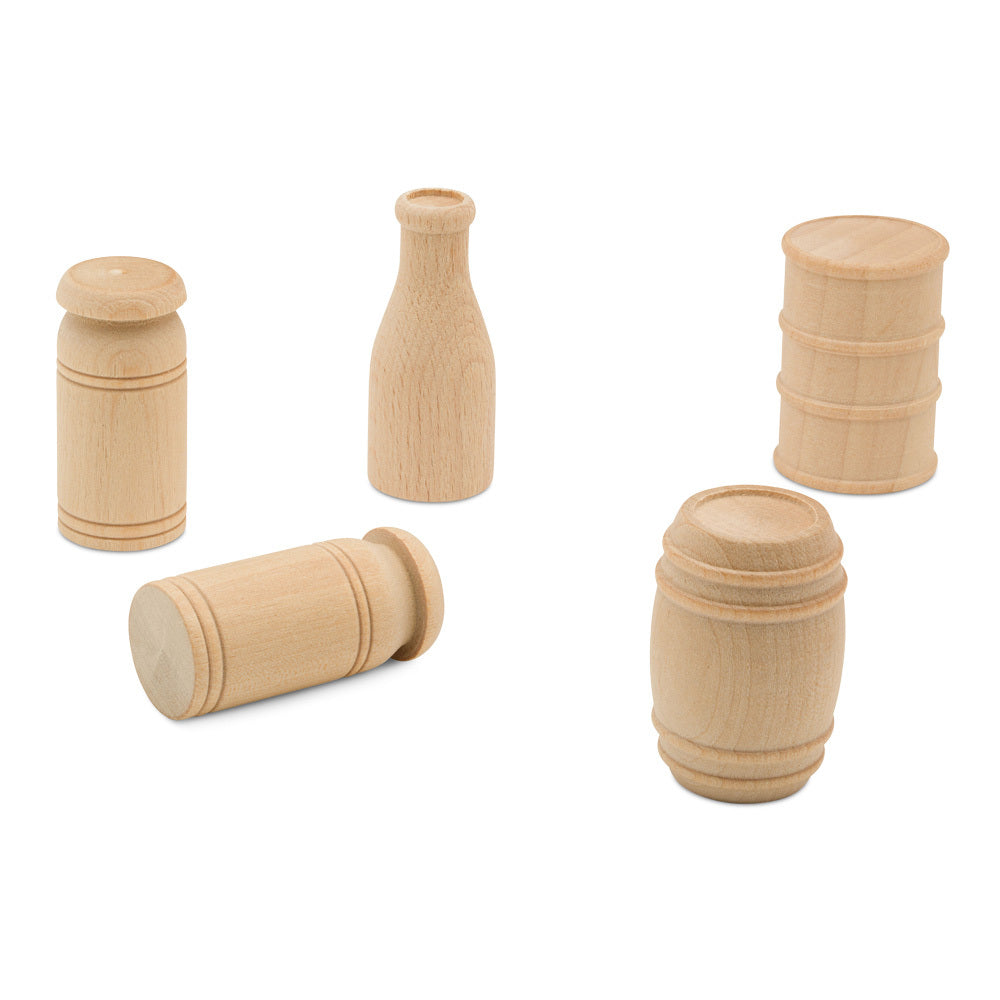
A flatcar with nothing to carry is just a shelf, so why not add some cargo? Mini wooden cargo from Woodpeckers offers a solution to the empty car dilemma with small, durable shapes you can load, strap, and unload a hundred times over.
The fun is in the variety: little crates and boxes for a freight run to the kitchen, cylinders that read as barrels or fuel tanks, chunky blocks that become lumber stacks or machinery. Give each car a purpose, and suddenly the route has meaning.
Build the decks to match the loads you love. For logs, add a pair of simple stakes at the sides and a stop at the end so the bundle stays put if and when you need to push the “emergency brakes.” For barrels, a shallow recess in the base keeps them from rolling off when making tight turns.
For crates, glue two thin battens across the deck and run twine or elastic over the top as a strap. The tactile step of securing the load is half the fun! If you want swappable materials, drill a few small magnet pockets into the deck and glue matching magnets into select cargo bottoms. The cars can then convert from timber to tanker in seconds, and the pieces still look like wood (rather than hardware).
Just as they do with the train’s main body, the finishes carry the theme home. Leave cargo natural and stamp tiny markings (like a star, or a route letter) so kids can sort by symbol. Stain logs and dry-brush a light highlight on the cut ends. Paint one barrel a distinct color and turn it into “hazmat” for high-stakes deliveries. And if your builder wants to sign their work, flip a crate and pencil a name and date on the bottom. It’s a simple time capsule you’ll be glad you added when this set becomes a hand-me-down.
Planning your train
Even a simple three-car set benefits from having a blueprint. Sketch the train on a piece of graph paper: engine, footprint, car lengths, wheel centers, and coupler locations. Keep coupler heights consistent across the whole thing so the cars connect cleanly.
Two small upgrades make a big difference in use. First, weight. A thin lead-free steel plate or a couple of coins glued inside the engine’s body lowers the center of gravity and helps the first car track straight.
Second, balance. If a car noses down when loaded, move the truck mounts a touch toward the weight or add a hidden stop at the rear so cargo sits centered between axles.
Maintenance is quick and keeps the set rolling for the next kid (or adult!). Once a season, wipe road grit from treads, rub a finger of wax on axle ends, and check couplers for looseness. If a wheel takes a knock and raises grain, a ten-second sand brings back the smooth texture.
Get your wooden train parts at Woodpeckers
Ready to build or upgrade a set that actually rolls, hauls, and lasts? Start with the right pieces. Woodpeckers stocks classic wood wheels for smooth running, wooden treaded wheels for grip on rugs, and wooden slab wheels for a heavy-duty look. All three are easily paired with true-fit wooden axles that spin freely without wobble. Finish the scene with mini wooden cargo (crates, barrels, and logs), so every trip has a unique purpose!
Did you enjoy our guide to wooden train parts? Be sure to let us know in the comments and check out our wooden train wheels shop to find the perfect gift for yourself or a loved one!
